
Vol I, Issue 22. Quarter 3 – 2025.
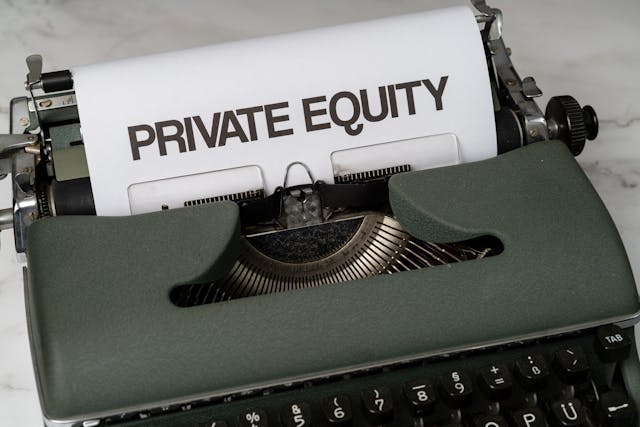
Recent headlines refer to new Executive Orders that aim to set up a system where money in retirement accounts can be directed to Private Equite (PE) funds. You may be asking yourself whether this is a good or bad idea. In short – it is a HORRIBLE idea that you stay away from if at all possible, and here is why.
Private Equity funds can be thought of as a special type of investment club. Historically, the main customers have been wealthy individuals and institutions with large amounts of capital to allocate, including state pension funds, college endowments, and private foundations. The original investors put in significant amounts of cash so that a management team can use it to do deals that the average investor simply cannot do. By far the largest share of these deals are Leveraged Buy-Outs. You may remember the bad press that LBO efforts received back in the 1980’s. So, if you still have those biases, let me say, these arrangements are just as problematic now as they were then, and that’s why my advice is, when someone comes along to sell you on the idea of a Private Equity (PE) fund – RUN.
This is essentially a house flipping business for small companies instead of houses. Here is how it works. The fund manager takes the pool of money that has been collected and goes out to buy one or more companies. They will augment the pool of capital raised by borrowing as much as possible to be able to do larger deals. They then take control of the company, borrow a lot more money to “fix” the company, and look to sell it sometime down the road. The sale is typically part of a Merger or Acquisition (M&A) deal. A few will close as an Initial Public Offering, but these are relatively rare since there a few hundred IPO’s in the US each year, while there are roughly 15,000 M&A deals.
Since these deals are so hard to find and hard to pull off, the PE fund will typically have a very small number of companies in a single fund – say 4 or 5 at the most. In addition, to flip the company that was purchased the fund managers have to take a few years to get the company ready for sale. Consequently, the PE funds typically require that you leave your money in the fund for 5 to 10 years before you can cash out. This creates a huge red flag. You give you’re your money and you accept the illiquidity of the arrangement – meaning that your money is no longer free to move and is stuck in the fund for quite a while.
Over that period the PE fund manager has to state the value of the fund based on what they “think” they will be able to sell for down the road. There is no publicly traded version of this particular opportunity since it is singular in nature. Consequently, their “projection” is just that – a wild assed guess. In addition, they have a HUGE incentive to be “optimistic” and claim that it will sell for a killing. This is not to say that they are consciously lying. It’s just amazing what you can convince yourself to believe when millions of dollars are in store for YOU if you say it’s a great deal. This is the position that the PE fund manager is placed in, whether he realizes it or not. The problem for the small investor is that this projection is the only thing that you have as a valuation of the fund until a company in the portfolio is actually sold. By the way – in most cases, the fund manager that bought the target company is not obligated to stick around until it is sold. Until that sale takes place there is really no market for the product that you bought and your money is temporarily stuck.
The companies that the PE funds buy are typically low-tech, profitable, of small or medium size, with good balance sheets so that they can borrow a lot of money. Ironically, a key selling point of a PE find is that they will buy companies and load them with debt. This leverage lets you have a larger company than you started with, and the pitch is that this will increase the profits as well and the Internal Rate of Return will rise. Yes – they really do claim that the more debt involved the better. This is the equivalent of the “make easy money in real estate with no money down” approach. If that comparison makes you uncomfortable (and it should) – RUN.
One fascinating aspect of this space is that in the early 2000’s it seemed to work really well. In fact, the industry created 19 new billionaires from 2005 to 2020. (Not the people that invested in the funds – the people that ran them.) A fundamental problem here is that the deals are so hard to do that the world’s best manager can only expect to buy two or three firms a year using the PE fund. If the talent of the manager is the key point to creating value this is a HUGE red flag. The problem is that the great skill of a single manager is impossible to scale up efficiently. If that is true, then as this space gets bigger, the returns will drop. Several researchers have pointed out that this is EXACTLY what has happened in this space over the past 20 years. The more aggregate money deployed in PE funds, the lower the average return becomes.
By the way, since the manager’s talent is obviously key, they “deserve” a much higher fee than anyone else in the game. Your index fund has a fee that may be as low as 0.1% per year. The typical PE fund charges at least 3% per year. This means that even if they beat the market by 2% per year – you still lose. Jeffrey Hooke has a great book on this, “The Myth of Private Equity.” He points out that many of these funds did beat the market up to about 2005, when the PE space was pretty small. Of course, once firms saw money to be made many more players dove in. This increased the number of bidders for each ideal target, and the prices of the best targets rose. Once this happened, the easy money was gone and returns dropped. His analysis shows that the Median return of these funds since about 2006 has been significantly below that of the S&P 500. If the capital available to these funds grows significantly after they get their hands on the money in your retirement accounts, it seems obvious to me that this problem will only get worse.
My favorite nerd that speaks about these issues is Ben Felix at PWL capital. I highly recommend his videos on this topic, including this one (Ben Felix, 2023). He points out that several researchers have noticed that the PE deals are essentially investments in profitable, small-cap firms, with low PE ratios. These researchers have consistently shown that you can get the same performance by buying index funds that concentrate on this space, while avoiding the high fees, and not locking your money into a fund for an extended period of time. He also finds that in data sets where the Average PE fund outperforms the index, the Median actually does worse. In other words, more than half of the funds do worse than a simple index fund. The average looks better because a small number of funds do very well. Again, this issue is likely to get worse as the total assets in these funds grows. He also argues that the very best funds are most likely to stay in the hands of the largest investors – and not go to investors like you and me that have to share the returns with thousands of other small account holders. As Ben puts it:
The hoped for, extravagant returns from illiquidity and manager’s skill are simply not there for investors, after fees.
Our friend Jeffrey Hooke adds an additional note on this point. He worked for firms that do these deals and notes that the total fees involved are typically much greater than 3% and are often handled as “off balance sheet costs.” This is an obtuse way of saying that you, as an individual investor will not even know what the total fees actually are. This must be understood in the context of the fact that the PE fund negotiates the deals to buy target firms. They also negotiate the deals needed to sell that firm at the end of the process. What clauses they add into these contracts to extract cash for themselves will be VERY hard for you to ever see, and must eat into your returns.
If this is giving you a headache, let me simplify it a bit.
- You should NEVER invest your money in something that you don’t understand.
- Private Equity deals will always involve terms, and fees that you cannot see – thus you will never fully understand them.
- Paying someone a large fee to invest your money into something that you will not even be allowed to have compete information about (because of the private nature of the deals) is a VERY bad idea.
The claimed superior returns to PE deals can only exist if the market for the items involved is NOT efficient. That’s not necessarily bad if YOU have information that no one else is privy to. But it is very likely to end badly when YOU are the one without that information. Consequently, if you ask me to put my money into a PE fund, my response is very simple.
NOT JUST NO – HELL NO!!!
Return often for more useful insights. Better yet, subscribe to our monthly newsletter, to get a clean summary of our thoughts delivered to your e-mail box at the end of each month for you to digest, and share as you see fit.
0 Comments