
Vol 3, Issue 4. Quarter 2 – 2026
This is an old one from a book of short stories on Zen Buddhism, but it bears hearing again.
A farmer works a piece of land with a single horse. One day the horse runs away. His neighbors come around to commiserate the incident and cry about what a bad break it was, and the farmer responds – “Maybe!”
The next day the horse comes back and has 6 wild horses with him. The farmer manages to corral all of the horses. The neighbors come around to celebrate saying what a blessing this all is. The farmer responds – “Maybe”!
The next day the farmer’s son is trying to break one of the horses. The horse throws him off and the son breaks his leg. The neighbors come around saying what a stroke of bad luck this is. The farmer responds – “Maybe!”
The day after that some soldiers come along looking to force men into military service. Since the young son has a broken leg, they pass him by. The neighbors come around saying this is yet another great blessing. The farmer responds – “Maybe!”
The point to the story is not that the farmer has a one-word vocabulary. It is that he recognizes that our assessment of events is almost always premature. It is based on an unexplored assumption that what was in effect yesterday is the only model of how the world works today, and that what looked bad from the perspective of yesterday’s world must be true for tomorrow’s. This is simply naïve and not a good basis for judging any unexpected event.
What does this have to do with you and your money? Consider a parallel tale with a small twist. Michael Burry made himself world famous with a single prediction. He studied mortgage markets, and in 2007 predicted that the housing market was soon to have a major drop due to the overuse of repackaged mortgages, and turning them into bonds that got AAA ratings from the rating agencies. Burry saw that this was a proverbial house of cards. But his assessment had some weight behind it because he ran a hedge fund at the time. He, in effect, bet that the market would fall – a lot. When residential real estate fell 32% nationwide and the S&P 500 fell 57%, his hedge fund generated a profit of $725 million. Burry became a star overnight and was the central figure in Michael Lewis’ book, The Big Short. It is now believed that his net worth has surpassed $1 Billion.
The Big Catch
You probably didn’t hear about what happened next. Consider the predictions that Michael made after the great recession.
December 2015
“The stock market will crash within the next few months.” (The S&P 500 rose 11% over the following 12 months.)
May 2017
“A global financial meltdown is about to start.” (The S&P 500 rose 11% over the following 12 Months.)
September 2019
“The market will crash due to a bubble in index ETF’s” (The S&P 500 rose 15% over the following 12 months.)
March 2020
“The market will continue to collapse.” (The S&P 500 rose 72% over the following 12 months. Yes, you read that right – 72%.)
February 2021
”The market will fall, especially Tesla!” (The S&P 500 rose 16% over the following 12 months, and Tesla rose 13%.)
September 2022
“The bottom has not yet hit!” (The S&P 500 rose 14% over the following 12 months.)
January 2023
“A recession is near and inflation will rise! Sell the S&P 500” (The S&P 500 rose 25% over the following 12 Months.)
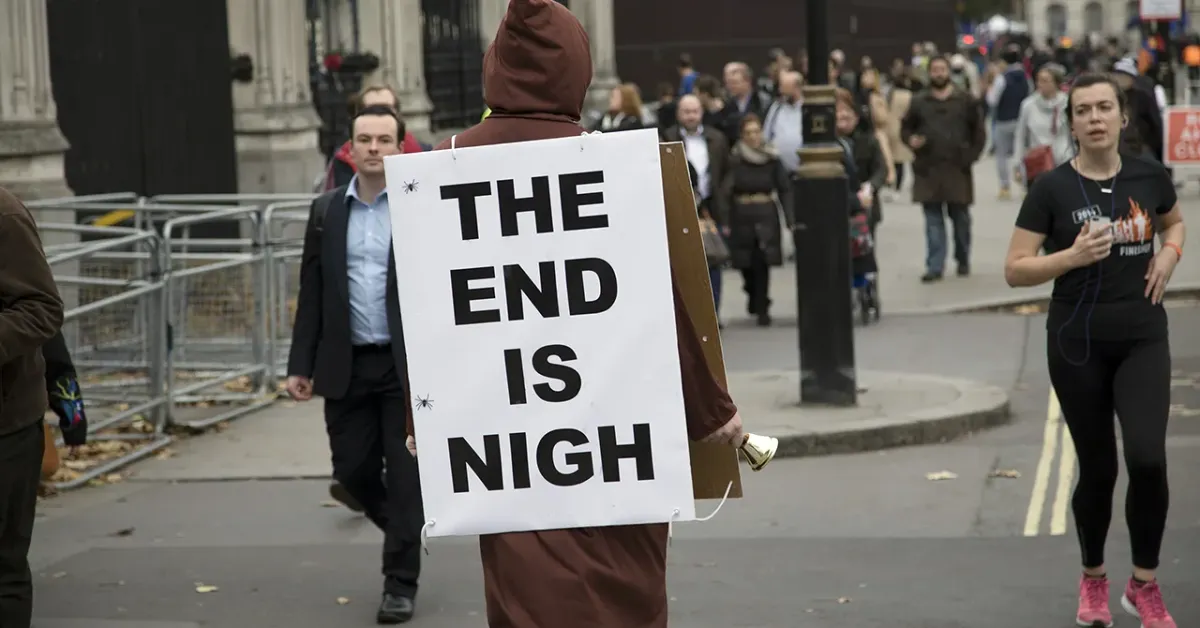
The take-aways seem to be two-fold.
- If you want to get on TV, predict the end of the world, and
- Predictions about the stock market from the BEST to ever do it are worth no more than your own, which is roughly 0
You may be wondering why Michael Burry keeps predicting the oncoming collapse. Did I mention the fact that the one time he got it right, he made at least $100 million and may now be a billionaire? That may have something to do with it. Think about it this way. How many times would he have gotten on television with the shocking announcement that “The S&P 500 averages about 11% per year so that is my best guess for next year!” I think it is safe to say that the answer is also, roughly 0.
I have said it before and I repeat it here. I cannot tell you what to do, but please do me a favor. Take this into consideration.
0 Comments