
Vol 3, Issue 13. Quarter 3 – 2026.
Apparently, it is absolutely necessary for me to define one of the simplest ideas that I can even think of – the humble average. I say this because I so often hear people speak as though they have no idea what an average is. Let’s define the term first, and then illustrate the problem. Consider a list of n numbers, with n being greater than one. I add all n of these numbers together. This yields a sum. I take this sum and divide it by n. The result is an average. Many of you are wondering why I am insulting your intelligence with this drivel. I am doing this because it has come to my attention that when people are presented with the right incentives they often become incapable of understanding this concept.
This came back to my attention when I went to my friendly neighborhood bank to cash a few Series-E savings bonds that I inherited. I don’t want to embarrass the firm, so let’s just say that it calls itself the bank of some country that I happen to live in. The poor fellow on the other side of the table really needed to convince me to use the services of some “advisor” that they had on staff, and he came up with a collection of statements that he thought were arguments in his favor. Here are a few examples.
Line 1: “He beat the market!”
The poor bank employee didn’t initially think that the advisor was all that great, but then “he beat the market,” so I should really listen to him (for a small fee of course.)
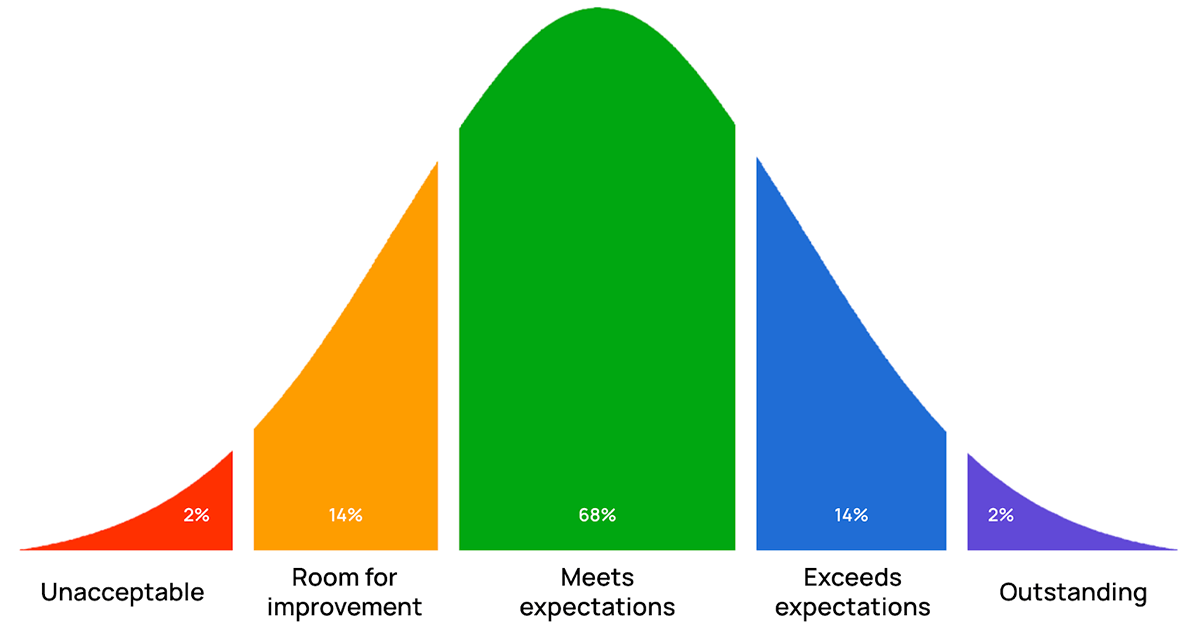
As I stared blankly at the speaker, he began to wonder whether I had gone deaf or was just plain stupid. Eventually, I was forced to explain that “the market” is made of literally millions of buyers and sellers. Over any given span of time many (perhaps as many as half) of them will “beat the market.” Of course, by “the market” we are simply referring to an average return level which is found from a list of numbers. I take n such numbers, add them together and divide them by n. This produces an average and roughly half of the numbers used to get that average will be above it. The phrases, “he beat the market” and “he didn’t beat the market” are equally informative, because they tell me nothing.
Line 2: “Yeah, but he beat the market over 5 years!”
If we are looking at returns over 1 year, 5 years, 10 years, or 62.8 years, (which is about my age) the average is still a collection of numbers added together and divided by the number of entries used. Something like half of them will be above the average, and the other half will be below. So what?
Line 3: “He picked a company that beat the market!”
I was getting a bit weary at this point, so again I said nothing at first. Apparently, he didn’t see how the same logic that I just applied to stock-pickers also applies to the stocks that they pick.
Line 4: “You need commodities in your portfolio!”
I already have that. I can hold gold, or I can hold stock in companies that mine gold. The stock price of the gold mining company is highly correlated with the price of gold. But in addition to the value of the gold they control, I also get value from the quality of the management, from the dividends that they pay, and from improvements in technology that will be used to get at the gold in the future. That is why the returns from holding stocks in gold mining companies are consistently better than the return from holding the gold itself.
Yeah, but what about oil – Same thing.
Yeah, but what about crypto – Same thing.
Yeah, but what about real estate – Same thing.
Yeah, but what about international real estate, where they use crypto to fund the development of oil and gold mines – Same thing! (OK, I made that one up, but you get the point.)
The total return of a market is simply the average of the returns of all of the companies in that market, and the profits of each company are made by combining then profits that they get in each of the market spaces in which the company operates. Over any stretch of time some of those spaces will do better than others and some of those companies will do better than others. Again, that’s why it’s called an average.
Line 5: “You need exposure to private (fill in the blank).”
Firms go to private debt markets when the banks won’t lend them money. Nothing makes me think that one guy is going to evaluate the debt better than thousands of bankers do. Private equity provides much less visibility into a company’s actions than public equity does. The requirements of publicly traded companies to report results are much more stringent than they are for private holdings. Nothing makes me think that one guy can evaluate a company with less information, better than thousands of analysists do with complete information.
The bank employee eventually got around to explaining to me that it would be easier for me to mail the bonds to the Treasury department for redemption because the bank could only process 10 at a time. Since this poor fellow just wasted 20 minutes of my day, I figured, at least I could use the content of this dreadful conversation for a blog post. I put up with this crap so you don’t have to, You’re welcome.
0 Comments